
Contact Us
Box Office: Monday–Friday, 11:00 to 4:00, and one hour before performances.
Seeing America in Scale: A Humongous Photography ExhibitionOn view in the Katzen Arts Center's Kreeger Lobby in fall 2026
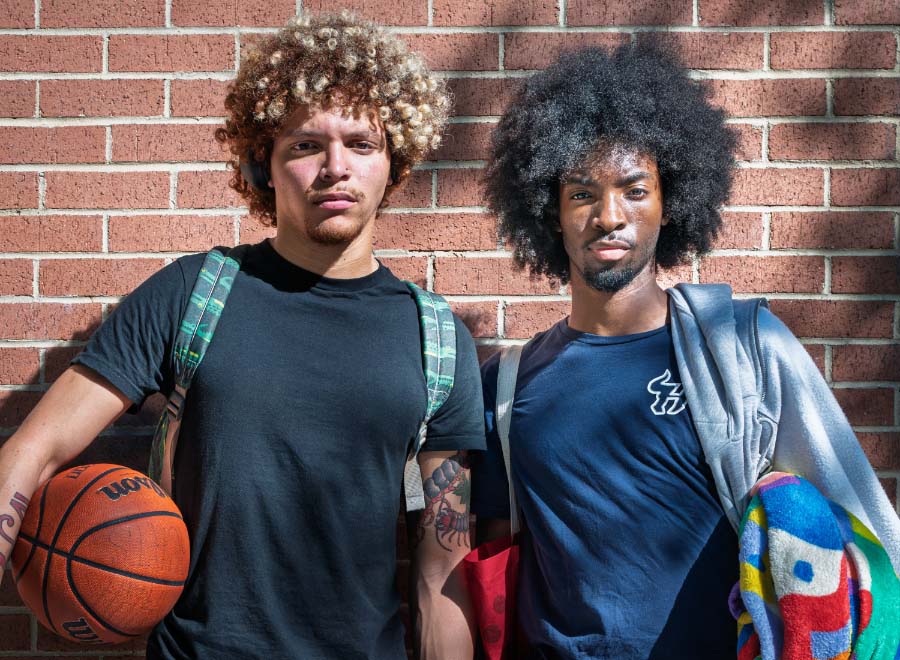 “Basketball Players” by Felix Alvarado
Seeing America in Scale is a large-format photography exhibition celebrating diverse perspectives on American life, culture, and community through visual storytelling. Photographers were invited to submit high-resolution images capturing moments, experiences, and narratives that reflect the richness and complexity of contemporary America.
The Studio Art Program is thrilled to officially announce the selected artists for our upcoming photography exhibition, Seeing America in Scale: A Humongous Photography Exhibition, debuting in the Katzen Arts Center’s Kreeger Lobby this fall.
We received an overwhelming, incredibly competitive response to this open call, with over 190 entries from a remarkably talented, diverse pool of lens-based creators. Evaluating such a high caliber of work was an immense task for our panel. The chosen photographs represent the absolute pinnacle of visual storytelling, artistic vision, and technical execution within our creative community.
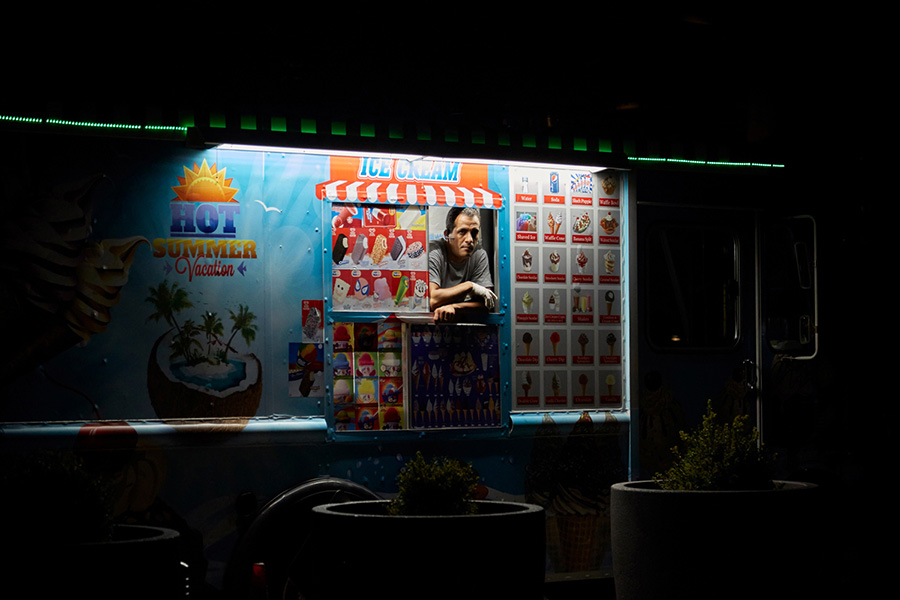 “Ice Cream Man, Jersey City” by Luke Walter
The Finalists
Out of nearly 200 submissions, these nine extraordinary artists have been selected for the physical gallery exhibition. To honor the depth and significance of their narratives, each work will be brought to life at a monumental scale, creating a breathtaking, immersive environment that commands the Kreeger Lobby.
- Luke Walter
- Pedro Ledesma III
- Scott Robinson
- Brian Kent
- Sally Davies
- Anice Hoachlander
- Shamila Chaudhary
- Felix Alvarado
- Tony Ventouris
The Semi-Finalists
These artists advanced through a rigorous technical check-in and final jury review. We are incredibly proud to recognize their exceptional artistry.
- Kenny Webster
- Chris Cunningham
- Angelica Credle
- JR Landolina
- Marideth Joy Sandler
- Marc Mauer
- David Evans
- Chase Lech
- Saul Pleeter
- Jennifer Callaghan
- Sonya Grier
- Guayi Fernandez
- Mohamad Baltaji
- Winston Rogers
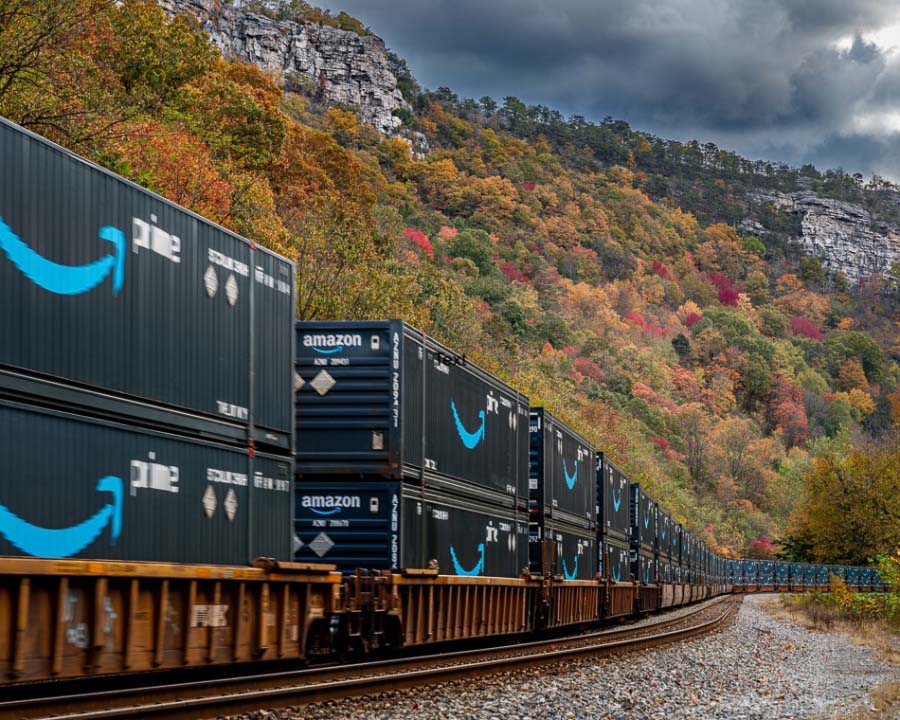 “American Prime” by Pedro Ledesma III
Join Us for the Opening Celebration
We invite our entire community, along with the artists' family, friends, and peers, to join us and our jury panel to celebrate these incredible achievements in person.
Opening Reception: Saturday, September 5, 2026, 6:00 – 9:00 p.m.
Exhibition Dates: September 5 – December 6, 2026
Location: Kreeger Lobby, Katzen Arts Center at American University
Thank you to everyone who shared their time, energy, and artistic vision with us. We cannot wait to see these masterpieces brought to life on the gallery walls!
Meet the Jury Panel
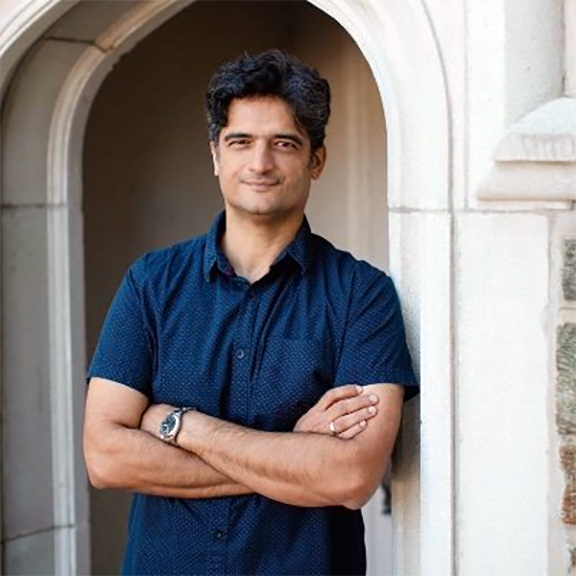
Mubbashir Rizvi
Dr. Mubbashir Rizvi is a Professorial Lecturer in the Department of Anthropology at American University. He holds a Ph.D. in Social-Cultural Anthropology from the University of Texas-Austin and a BA from Brooklyn College (CUNY). His research and teaching interests span social movements, political ecology, racial capitalism, environmental justice, and indigenous and peasant land rights across South Asia and its diasporas. He is broadly interested in how marginalized communities strive to build a good life in the midst of economic uncertainty and state repression.
His book, The Ethics of Staying: Social Movements and Land Rights in Pakistan (Stanford University Press, 2019), offers a history and ethnography of the Anjuman-e-Muzareen-e-Punjab (AMP), a land rights movement that successfully challenged the Pakistani military’s efforts to privatize state-owned lands. Beyond this monograph, his scholarly publications analyze how infrastructure projects shape political subjectivity in Punjab, how counter-terrorism policies are deployed to suppress agrarian demands, and the complex dynamics that arise when NGOs and civil society intervene in grassroots struggles.
Dr. Rizvi's current fieldwork turns toward informal urbanism in Karachi’s food markets, examining how these spaces structure relations of coexistence in the aftermath of urban violence. Closer to home, he is also directing a Washington, D.C.-based project that investigates the overlooked history and memory of the Potomac River waterfront through the lens of racial capitalism.
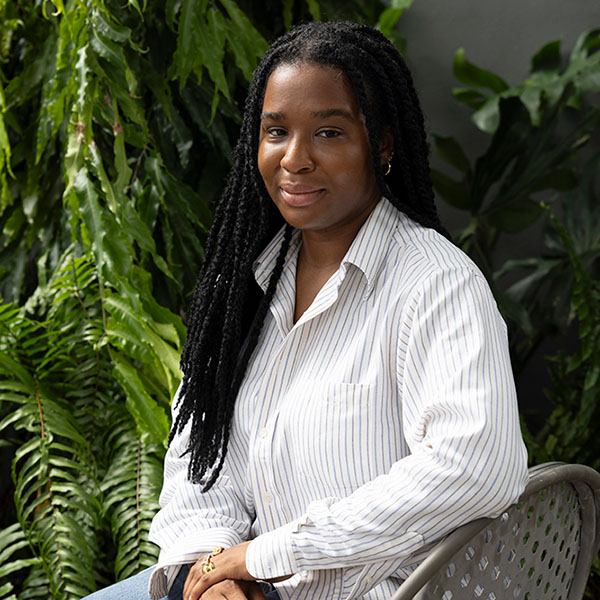
Kat Thompson
Kat Thompson is a lens-based artist and educator based in Virginia. She holds an MFA in Photography & Film from Virginia Commonwealth University and a BFA in Photography from George Mason University. Her interdisciplinary practice spans photography, video, textiles, sculptural collage, and installation. Through layering and material juxtaposition, she examines how images and objects function as vessels for memory, history, and identity, with a particular focus on the African Diaspora. Her work considers the construction of Black selfhood, exploring how cultural memory, ancestral inheritance, and lived experience converge across personal and collective narratives.
Thompson is a 2023–2025 Hamiltonian Artists Fellow. She has presented solo exhibitions at 1708 Gallery (Richmond, VA), Hamiltonian Artists (Washington, D.C.), and George Mason University. Her work has been exhibited throughout the Mid-Atlantic and southern United States, including Page Bond Gallery (Richmond, VA), Visible Records (Charlottesville, VA), Tephra Institute of Contemporary Art (Reston, VA), and Green Space Miami. Additionally, she has participated in prestigious residencies at The Watermill Center, MASS MoCA, the Women Photographers International Archive (WOPHA), the Torpedo Factory Post-Graduate Residency, and the VisArts Gibbs Street Residency.
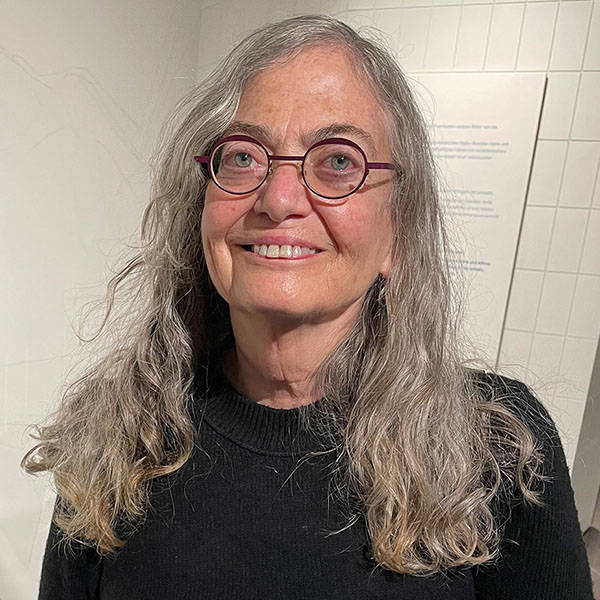
Gail Rebhan
Gail Rebhan is a Washington, D.C.-based photographer and Professor Emerita of Photography at Northern Virginia Community College. She holds an M.F.A. from the California Institute of the Arts and an undergraduate degree from Antioch College. Integral to her various bodies of work is an interest in time and change. Her works, which often configure photographs and text in series, examine gender, aging, race, ethnicity, and the built environment. As the child of immigrants, Rebhan documents the experience of several individual Jews under Hitler’s reign in Europe and their immigration stories.
Her artistic projects explore both personal and collective histories across generations. Her Art on the ART bus project, commissioned by Arlington County, Virginia, tells immigration and assimilation stories crossing generations and ethnic groups, while her site-specific photo-collages examine the cultural history of particular locations in Washington, D.C., and surrounding communities. In her self-portrait series, Living, Rebhan examines the taboo subject of female aging, while her recent work, What Questions Do We Ask?, uses shifting U.S. Census questions to create a visual synopsis of U.S. history.
Rebhan’s work has been featured in hundreds of exhibitions, including at the Lentos Kunstmuseum (Linz, Austria), Museum Folkwang (Essen, Germany), and Blue Sky Gallery (Portland, Oregon). In conjunction with her first museum retrospective, Gail Rebhan, About Time, at the American University Museum-Katzen Arts Center in Washington, D.C., MACK Books published Gail Rebhan, About Time with running commentaries by Sally Stein. In 2025, this retrospective traveled to the California Museum of Photography in Riverside. Rebhan actively photographs and coordinates exhibitions with the Bethesda African Cemetery Coalition.
Part of American University’s 250+ Initiative
This exhibition is proud to be part of the 250+ at American initiative. This year of multidisciplinary programming invites our community to reflect on the nation’s past, engage in the present, and imagine the future. Together, we confront our complex history, draw on our diverse perspectives, and apply our collective expertise to the challenges facing our city, country, and world—ensuring a future defined by civic pluralism and a thriving democracy.
Questions
For questions, contact Naoco Wowsugi at art@american.edu. Please use the subject line “Humongous Photo Exhibition."