
Five Questions with Thomas Kahn
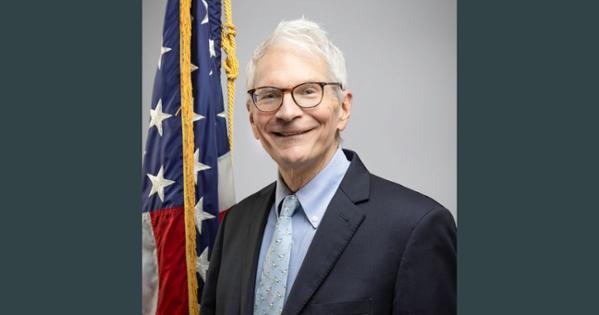
Thomas Kahn, the new acting director of SPA’s Center for Congressional and Presidential Studies (CCPS), spent 33 years as a senior congressional staffer, including 20 years as staff chief for the House Budget Committee, the longest such term in U.S. history. Since 2019, he has served as partner in The Cormac Group, a bipartisan consulting firm supporting democracy building. A CCPS Distinguished Faculty Fellow since 2020, Kahn was appointed to the Commission for the Preservation of America’s Heritage Abroad by President Joe Biden.
He sat down to answer five questions for SPA.
1. Talk about your long-time role with the House Budget Committee. What do you think made your longevity there possible?
First of all, I had an amazing staff and credited them whenever possible. Second, we got a lot accomplished in two decades. Among those successes, we passed the bipartisan 1997 Balanced Budget Act, which helped balance the budget for four years in a row [after] months of intense bipartisan negotiations. We also passed the Affordable Care Act, extending health insurance coverage for 30 million Americans. We wrote 17 different fiscally responsible budgets that protected working families. Finally, we fought successfully to save Medicare and secure Social Security from an aggressive campaign to privatize both of them.
People often ask how you were able to do it. There is one thing in particular which helped. I always tried to listen, and not just to people on my side, but especially to those on the other side of the aisle, to find common ground. Ultimately, you can learn the most from people whose views are very different from your own. Listening is really an art––one that I'm not very good at, but I try.
2. What initially attracted you to AU and CCPS? How long did you spend as a faculty fellow before stepping up to acting director, and what kind of projects did you work on?
After 33 years on Capitol Hill, I thought working with and teaching young people was a real opportunity to pass along some of what I had learned. American University, among other things, has one of the best reputations in the country. Its faculty (people like Jim Thurber and David Barker) are renowned for its study of Congress and the presidency, and it has CCPS, alongside other distinguished centers and institutes.
Finally, I'd had the pleasure of working with [then-AU President] Sylvia Burwell for about 25 years when she was in government. When we discussed the opportunity, I was honored by the prospect of joining such a distinguished university. And I have never looked back.
As a faculty fellow, I teach undergraduate students about Congress and the presidency each semester. I love teaching them and it’s an incredible amount of fun. I also learn a lot from them. So, we teach each other. One of the proudest points in my entire career was American University’s decision to give me the award for best adjunct faculty member. I keep it by my desk. I am not entirely sure why, but my students seemed pretty pleased with my teaching.
3. Talk about one or more goals/plans you have for CCPS.
There has never been a more important time to educate students and the broader community about the importance of preserving our democracy and strengthening Congress, at a time when Congress was not doing its job very effectively. Our democracy is now facing unprecedented threats. We have an executive branch exercising domineering control over the other two branches and over the country at large. The founders, in Article I, intended for Congress to be the dominant of the three branches (the president was Article II), with the objective to represent and effectuate the will of the American people and protect our democracy.
So that is my goal. Now the question is, how can CCPS achieve that goal? The answer is strengthening the Center’s outstanding institutes and initiatives, such as the Campaign Management Institute, the Public Affairs Institute, and the Thurber Dialogues on Democracy. All are nationally renowned. I am looking to broaden them whenever possible, to expand their reach and introduce more people to their important work.
CCPS sponsors a number of speaker programs, to talk about some of the critical issues facing our country and the essential role of Congress in protecting our democracy. Most recently, [we brought in] former Senator Russ Feingold to talk about the influence of outside money. Also, we have a journal called Congress and the Presidency.
4. You are quite a media presence lately, with guest essays in NYT and Politico. How would you characterize the kind of insight you bring to questions of budget transparency, and how do you assess that of the current administration?
My particular expertise is the budget. The Constitution gives Congress the power of the purse. That's by design. We were a colony under the occupation of the British, ruled by a king whom we did not elect. The whole idea driving the Boston Tea Party was “no taxation without representation.” Our founders decided that we wanted a Congress, elected by the American people, to decide how to tax and spend their money. Unfortunately, we now have an executive branch exercising enormous, excessive––in my opinion, illegal and constitutionally dubious––powers over the purse.
So, I think it's really important that Congress reassert its power and its responsibility over spending and taxation. The more I'm able to focus on these critical issues, and invite the American people to do the same, the more we can advance the public discourse on, for example, the important role of Congress in the power of the purse, the threat of large deficits and debt, and the essential importance of addressing it sooner rather than later.
The budget is such an important document; how much we spend, where we spend it, how much we raise in taxes, and who pays the taxes drives about 90% of public policy.
5. Talk about your appointment to the U.S. Commission for the Preservation of American Heritage Abroad. What draws you to this work?
It was really one of the greatest honors of my life to be appointed by President Biden to this commission, which identifies heritage sites abroad, especially in Europe, with a particular link to American citizens.
All of my grandparents came from Europe, and a good deal of my family was wiped out in the Holocaust. So, I saw it as an opportunity to identify and protect sites in Europe that otherwise might be destroyed, to preserve for future generations of Americans to visit and see. And the preservation of history is really necessary: it's through history that we can understand the present and sometimes the future.
To learn more about the work of CCPS, visit the website.