
Beyond the Blue
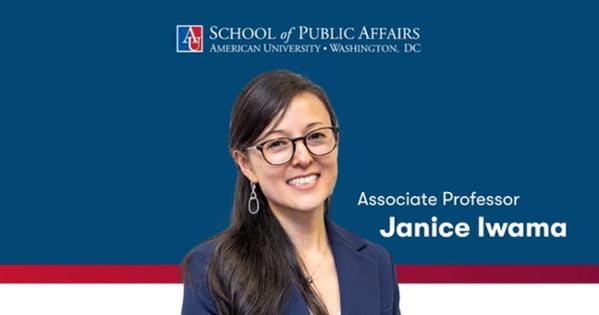
Amid heightened scrutiny of law enforcement and increasing concerns about officer well-being, an AU research initiative is striving to improve and fortify police peer support programs. This effort, aimed at bolstering officer mental health and enhancing organizational trust and civic engagement, signals a critical shift towards evidence-based practices in policing.
In January, SPA Associate Professor of Justice, Law, and Criminology (JLC) Janice Iwama received a grant from the American University Signature Research Initiative (SRI) to support this work. The project, titled "Translating Research into Practice: Evaluating Multi-Agency Police Peer Support Programs (MAPPS) to Advance Civic Engagement in Officer Wellness," connects Iwama with co-PIs Dr. Jennifer Kelly, a police and public safety psychologist, and retired Captain William Walsh of the Voorhees Police Department, who founded the multi-agency peer support program in question. The project examines program structure, implementation, and officer perceptions, with a particular focus on organizational culture, confidentiality, and trust.
Iwama and Walsh first met in 2021, when both were named National Institute of Justice Law Enforcement Advancing Data and Science Program (LEADS) Scholars. Walsh had just established the peer support program in Camden County, New Jersey, and partnered with Iwama to evaluate the program in 2023. Though the Law Enforcement Mental Health and Wellness Act of 2017 provided millions in funding for support programs, scholars and decision makers know little about their design and efficacy.
“The goal is primarily to identify how effective the Multi-Agency Peer Support Program is,” said Iwama, “and, in light of that, try to identify the key characteristics and competencies that make it work… It's like spending all this money on cancer treatment, only to realize that you don’t know how effective it is. We have to change our way of thinking that says that something is better than nothing, to focus on understanding––what is it about that something that makes it work?”
Their research design combines quantitative program data with qualitative insights from officer interviews and observations. Beyond data collection and analysis, the goal is to actively engage program leaders and peer supporters in interpreting findings, ensuring that research directly informs practice.
The interdisciplinary nature of the research team is a key strength, introducing decades of police service, clinical insights into peer support, and expertise in researching and evaluating police agencies. Melissa Kilmer, a fourth-year JLC PhD student, also contributed to the project, conducting qualitative interviews with officers and gaining exposure to a world often inaccessible to academic researchers.
“Participating in this research has been a wonderful way to develop a skillset related to designing, implementing, and analyzing qualitative data,” said Kilmer. “The partnership with local New Jersey law enforcement agencies is also special to me. I grew up in this area, and it is incredibly rewarding to apply [my SPA training] to benefit local law enforcement agencies.
The project’s deliverables extend beyond publications. The team aims to revise existing guidebooks and training materials for peer supporters, filling crucial gaps by including topics such as how to address grief. They also seek to provide agencies with clear evidence of program effectiveness, encouraging better advertising and access to support.
“We would like to illustrate to the world that here is a program that is accessible, inexpensive, and replicable,” said Iwama.
This research aligns with American University’s mission for inclusive excellence by addressing the critical needs of a particularly vulnerable population: first responders. “Law enforcement officers that face higher levels of stress are more likely to consider suicide ideation, especially post-COVID-19," Iwama explained.
However, Iwama hopes the benefits from the project’s findings ripple far beyond individual officers. By reducing the stigma associated with mental health in such a stereotypically masculine environment, it may be able to change perceptions and organizational culture. As officers who have benefited from or served as peer supporters ascend to leadership roles, “[they] actually value somebody who's gone to get help,” she said. “They find them to be resilient, not weak.”