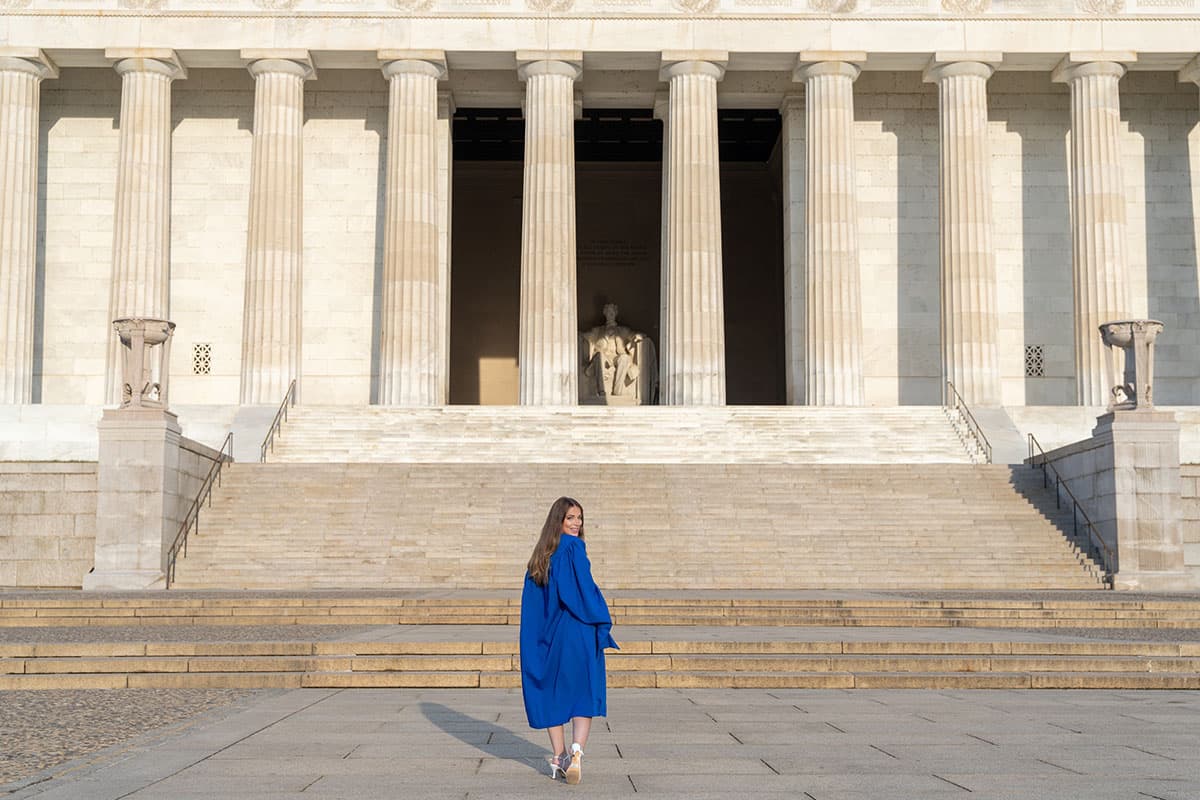
POV: Making a Career Pivot to Strategic Communication
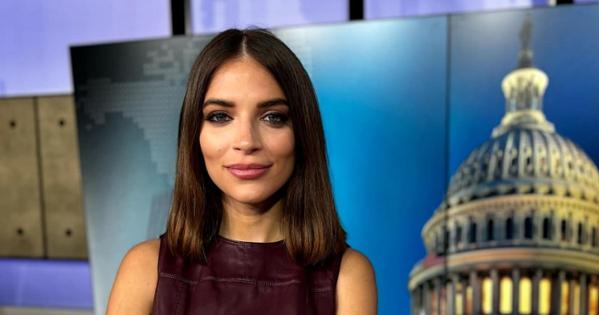
Júlia Riera spent years building a successful career as a multimedia journalist. When she decided she wanted to delve into a new area of communication, she knew that many of the skills she had developed were easily transferable. But, she found she needed a better understanding of messaging strategy, audience targeting, and emerging AI technology among other things. She found all of this in AU School of Communication's MA in Strategic Communication program. We talked with Júlia about what she gained from her time at SOC.
SOC: What made you decide to pursue an advanced degree in strategic communication?
JR: I studied journalism for my undergraduate degree and spent years working as a multimedia reporter, an experience that made me develop a huge passion for storytelling. However, I realized that I wanted to shift from reporting the news to understanding the strategy behind it––learning how organizations shape their message, manage their reputation and connect with different audiences. I also wanted to study strategic communication because it is a versatile industry that opens doors to a wide range of roles.
SOC: What made you pick SOC's MA in Strategic Communication program?
JR: I chose SOC’s MA in Strategic Communication for its practical approach. I was also drawn to the diversity of elective courses–such as crisis communications, international strategic communication, and AI & Digital tools. I also liked the flexibility of completing the degree in just one year as a full-time student, as well as the fact that the campus is located in DC, where there are many communications-related opportunities.
 SOC: What has been your most valuable takeaway from the program (can be more than one thing)?
JR: First, the expertise I’ve gained through completing the master’s program. From creating a strategic communication plan to managing a crisis and measuring KPIs, the degree gave me the tools I need to succeed in a communications role. Secondly, I would highlight the connections I’ve made: faculty, staff, and peers who have been a wonderful support system throughout the year and with whom I will definitely stay in touch.
SOC: What kind of strategic communication roles are you planning to pursue?
JR: As a journalist who previously covered U.S. - Latin America bilateral relations, I am eager to transition this expertise into strategic communication. Due to my curiosity and commitment to making a meaningful impact, I’m interested in strategic communication and public affairs roles related to international affairs, public policy, international development, and politics. However, during the master’s program, I’ve had the opportunity to connect with SOC alumni working in defense and cybersecurity. Hearing about their experiences sparked my interest, making me open to explore roles in those sectors as well.
SOC: Is there a course or a faculty member that stands out as having a strong impact on you?
JR: I really enjoyed several classes, but if I had to choose one I would highlight the International Strategic Communication class with Professor Priya Doshi. In this course, we had the opportunity to choose a country ––I chose Colombia––and develop various assignments while accounting for the country’s profile and cultural dimensions. For my final project, I designed a communication campaign proposal focused on the Organization of American States (OAS) addressing landmines that still affect parts of Colombia due to the armed conflict. I learned so much from this elective, and I truly appreciated Professor Doshi’s passion for teaching and her expertise. At the end of the semester, we also had the unique opportunity to visit the Italian Embassy and learn firsthand about digital diplomacy. These experiences have significantly broadened my knowledge and will be invaluable for my future career.
SOC: What outside-the-classroom experiences did you participate in?
JR: From day one, I knew I wanted to gain hands-on experience in strategic communication, so I applied for an on-campus role as a Communication & Outreach Specialist. I was fortunate to secure the position and have spent the past year working alongside Tia Milledge, the Communications and Marketing Director at the School of Communication, managing key initiatives–such as developing content calendars, producing and editing multimedia content, and executing digital campaigns. Additionally, I used our career center’s resources several times to refine my resume and cover letter while receiving mentorship for my professional development. Christina, from the career center, has been amazing!
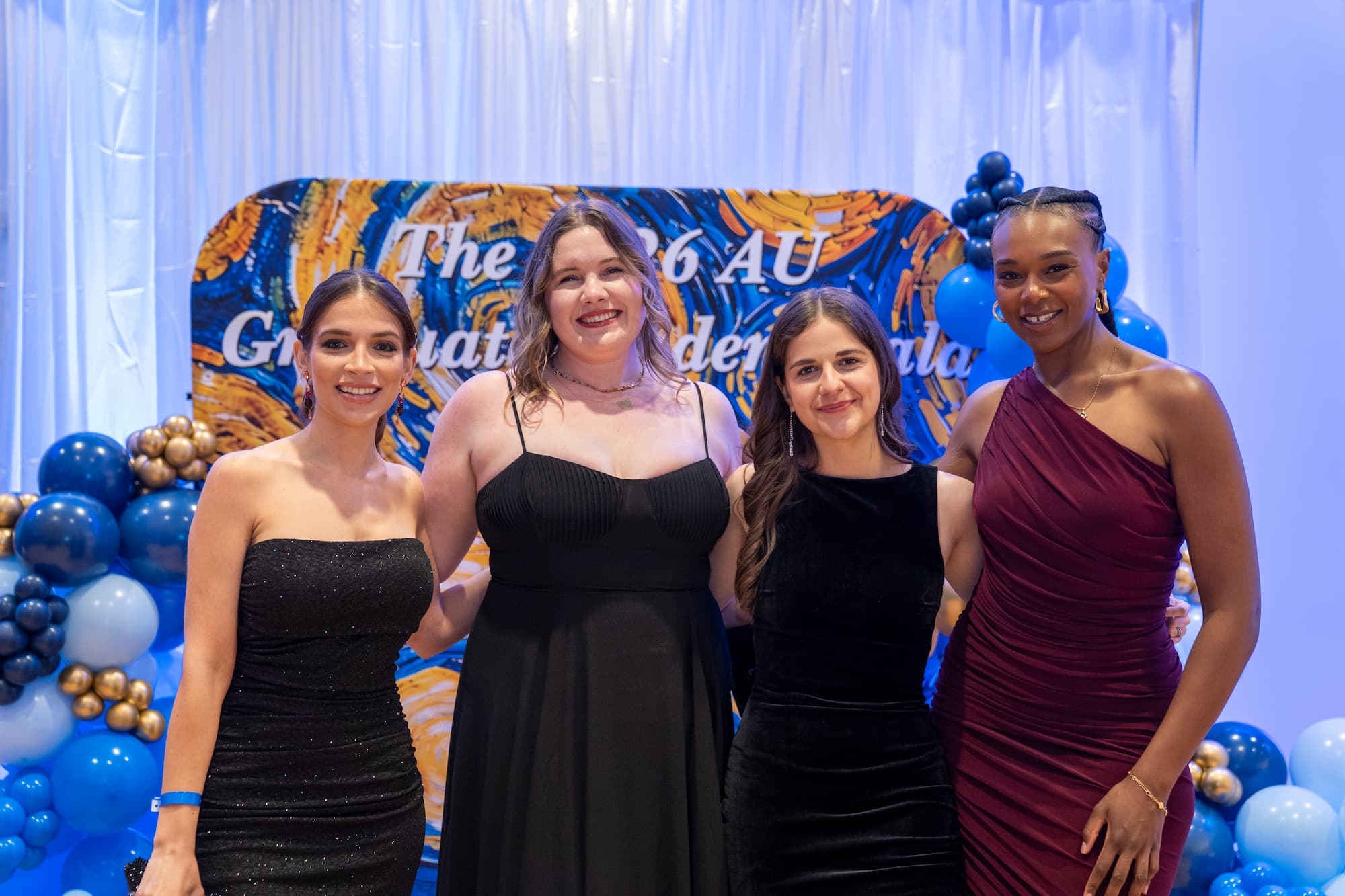
I also got involved with the graduate student council by helping them with their outreach strategy and actively participating in their events. It was a fantastic way to connect with peers and help build a strong community.
SOC: What career advancement opportunities were available/did you take advantage of?
JR: During my final semester, I began a Public Affairs Internship at the Pan American Health Organization, the World Health Organization’s Regional Office for the Americas. This was an incredible opportunity not only to amplify my professional network, but also to gain hands-on experience in a multilateral organization that is part of the United Nations. During my time there, I helped manage media relations, drafted articles and press releases, monitored media coverage, and contributed to the strategic communication response following the Venezuelan earthquakes. I am very grateful for the opportunity, which reinforced my interest in purpose-driven communication and made me realize how important communication is during a crisis.
SOC: What advice would you give an incoming Strategic Communication MA student?
JR: First, I would tell them to stay organized. Pursuing a full-time master’s degree involves weekly assignments, so using an agenda and starting on assignments early has been crucial for me. I would also encourage them to enjoy the experience! They will learn so much, meet incredible faculty members and peers, and make real connections. Finally, make the most of campus resources, especially the career center and networking events.