
SIS and YPFP Host Inaugural Research Symposium
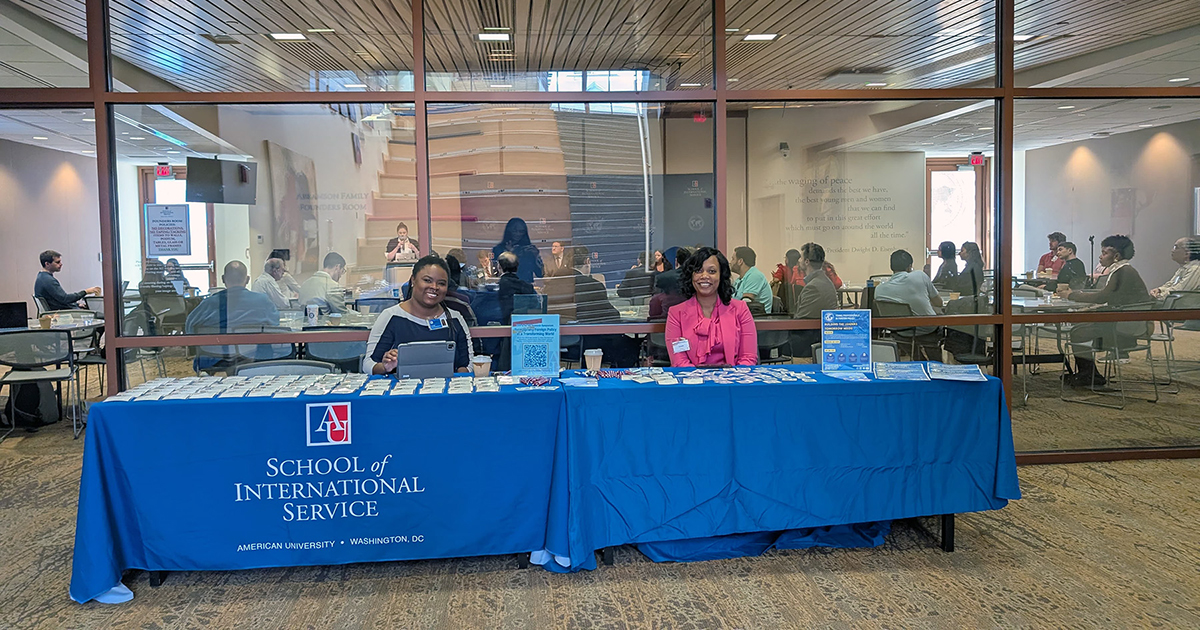
On Saturday, March 21, the School of International Service (SIS) and Young Professionals in Foreign Policy (YPFP) hosted the inaugural SIS-YPFP Research Symposium, “Reimagining Foreign Policy in a Transforming World.” The event, featuring keynotes speeches from Associate Dean of Research Simon Nicholson and Washington Post Global Security Analyst Josh Rogin, highlighted research from SIS graduate students and YPFP members on pressing foreign policy issues and connected emerging leaders with established experts and peers to foster meaningful dialogue and professional development opportunities.
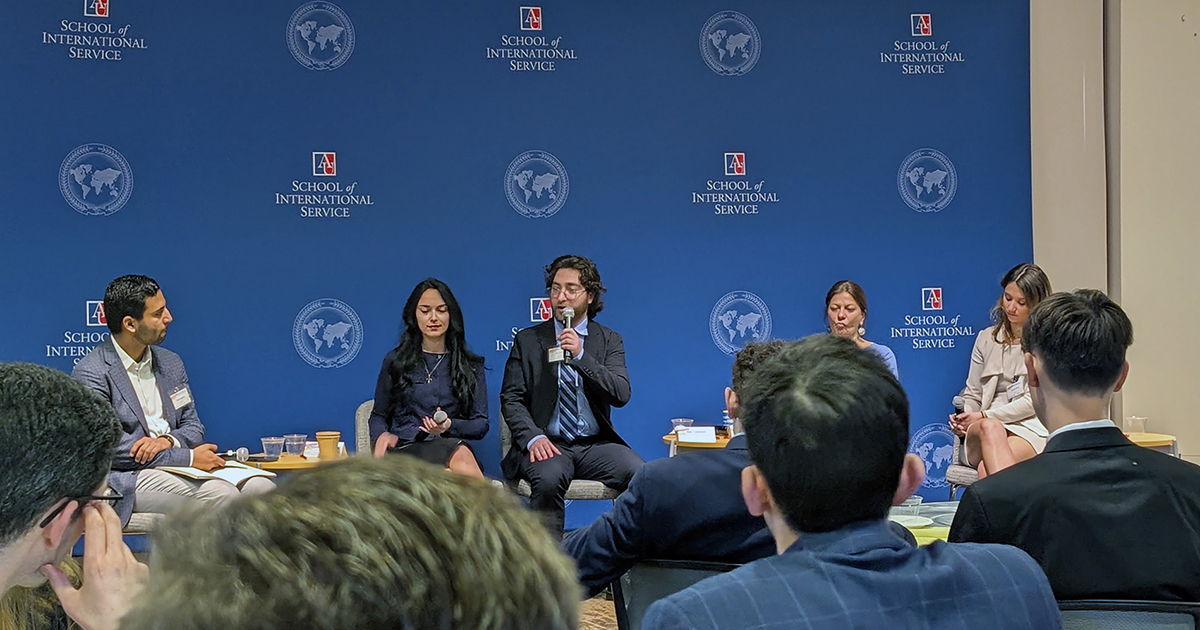
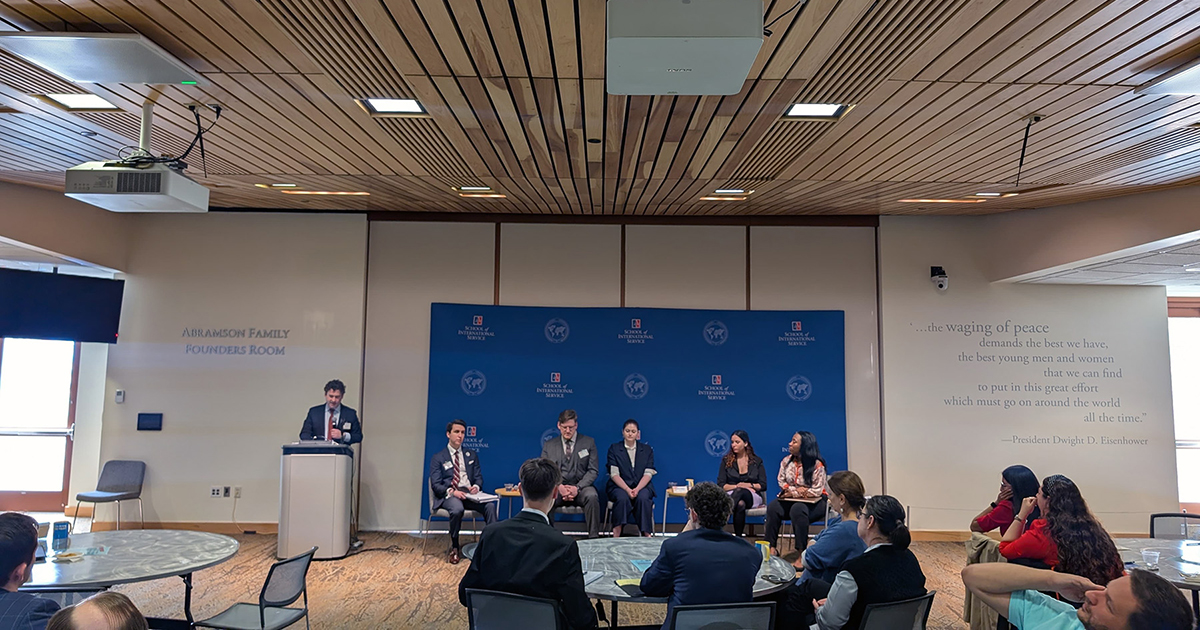
The symposium opened with SIS grad students and YPFP members presenting their original research on two moderated panels. The first panel, “Security Architecture in the Age of Geopolitical and Tech Disruptions,” explored how emerging technologies and shifting global power dynamics are redefining traditional security frameworks. SIS graduate student Ido Leidner presented his paper “Intelligentizing the Dragon - The Landscape of PLA Discourse on AI Militarization in the Age of Intelligent Warfare,” which examines how PLA strategic discourse on AI's military role has developed after the first AI-powered conflict involving a significant power and investigates potential differences in interpretations of the ‘intelligentized warfare’ strategic concept that may have emerged.
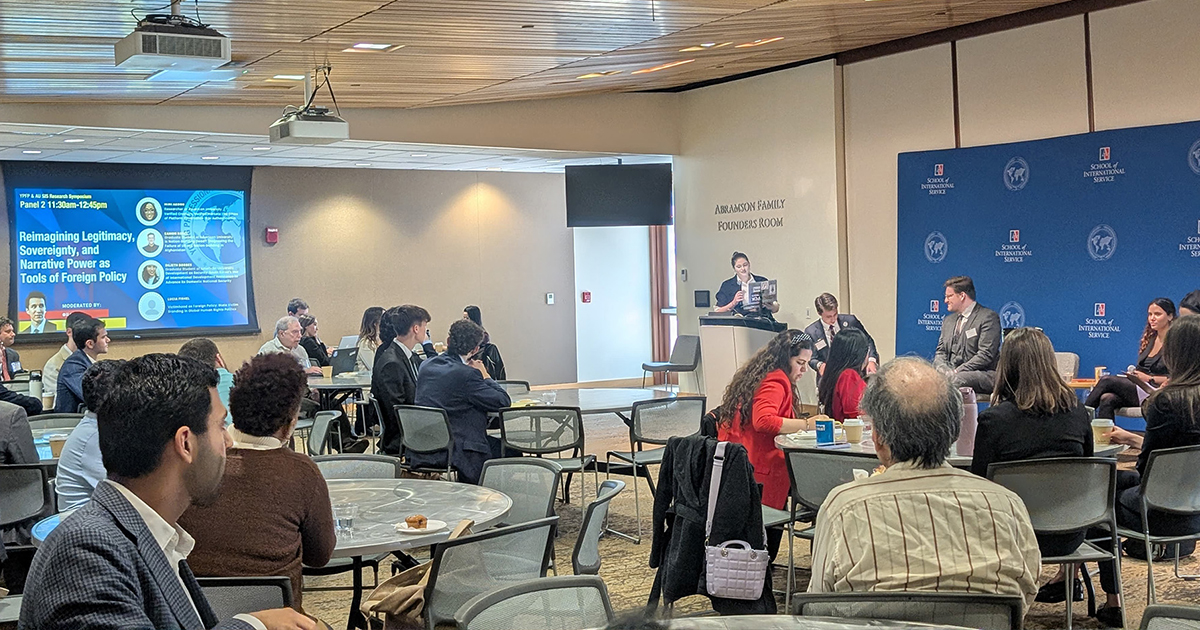
The second panel, “Reimagining Legitimacy, Sovereignty, and Narrative Power as Tools of Foreign Policy,” featured four SIS graduate students: Mimi Akong, Dilieth Borges, Lucia Fishel, and Eamon Kobel. Mimi explored Africa’s transition from aid dependency to development sovereignty in post-USAID Nairobi; Dilieth examined South Korea’s strategic use of international development assistance to bolster its own domestic national security; Lucia addressed the concept of "victimhood as foreign policy," analyzing how states use "victim branding" within global human rights politics to shape international narratives and legitimacy; and Eamon diagnosed the failures of U.S.-led nation-building in Afghanistan.
In the afternoon breakout sessions, symposium participants learned about how to navigate the path between scholarly and policy writing and publishing, led by SIS Journal of International Studies Editor-in-Chief Mahnoor Malik, Managing Editor Bradley Johnston, and Council on Foreign Relations Writer/Editor Clara Fong. Alternatively, Peterson Institute Communications Manager and Research Fellow Anjali Bhatt led a discussion group on “The Future of Power: Evolution, Tools, and Actors,” which explored how power is beingexercised in unconventional ways by a new array of actors, including tech giants, non-state entities, and emerging middle powers, to understand who will truly hold the reins in a transforming world.
The day finished with a networking reception at the Niskanen Center rooftop in downtown Washington, D.C.