
A Decade After the Paris Agreement, How Far Has Global Climate Policy Come?
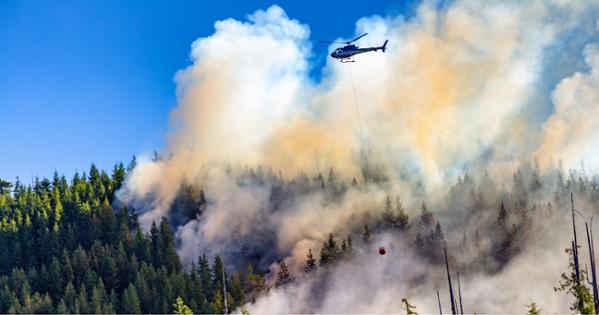
This November marks 10 years since the Paris Agreement took effect, with the goal of limiting global warming to 1.5 degrees Celsius to avoid the worst impacts of climate change. A decade later, the global climate policy landscape stands at a critical crossroads. While the landmark accord has helped strengthen national emissions pledges, accelerate policy action, and improve projections of future global warming, progress has slowed as the gap grows between what countries have committed to and what they have put into practice. The world continues to warm at a rapid pace, and the United States—the world’s second-largest greenhouse gas emitter—withdrew from the agreement again in January 2026 under President Trump after having done so during his first presidency. As world leaders gat her for the COP31 United Nations climate conference this week in Antalya, Türkiye, the effectiveness of international climate cooperation continues to be tested amid the warmest decade on record.
To learn more, we asked Wil Burns, co-director of the Institute for Responsible Carbon Removal and research professor at the School of International Service (SIS), to reflect on the Paris Agreement’s legacy, how far the world has come in tackling climate change, and the scale of the challenge ahead.
- How has global warming progressed over the decade since the Paris Agreement, and how much must emissions be reduced to meet global temperature goals?
- The decade between 2015 and 2024 was the warmest since modern recordkeeping began in 1880. Reductions of 25 or 50 percent below 2019 levels are needed to keep warming to 2 or 1.5 degrees Celsius. For a 1.5-degree scenario, we would have to reduce global emissions by 50 percent. The approach implies reducing high-, middle-, and low-income country CO2 emissions by 64, 52, and 35 percent, respectively, below baseline levels by 2030.
- What would be required to keep the 1.5-degree goal alive, and how urgent is the need for emissions reductions this decade?
- To avoid an “emissions cliff edge” in the 2030s, it is critical that global emissions are cut rapidly this decade. If current targets for 2030 remain (and are achieved on linear emissions reduction trajectories), keeping 1.5 degrees Celsius alive would require (improbably): cutting 2035 emissions by 75 percent, achieving net-zero emissions in 2040, and net removals of CO2 from the atmosphere after 2040. Global CO2 emissions would need to decline over 7 percent each year from 2030 to 2040. For comparison, the once-in-a-generation annual fall in global CO2 emissions in 2020 due to the coronavirus pandemic was just under 6 percent (after which emissions rebounded).
- How effective has the Paris Agreement been in driving global emissions reductions, and what challenges remain?
- Since the adoption of the 2015 Paris Agreement, countries have put forward emission reduction pledges which altogether would keep global warming below 2 degrees Celsius with greater than 50 percent probability. Policy implementation and shifts in, for example, technology costs have lowered end-of-century global warming prospects since 2015 by about 1 degree Celsius, yet still imply exceeding 2 and 1.5 degrees Celsius of global warming by a large margin. What is pledged is not yet implemented and scientific assessments have consistently highlighted the existence of an implementation gap between pledges being tabled and policies and measures being implemented.
- What additional international policy coordination is needed to achieve global climate goals?
- The Paris Agreement by itself seems unlikely to achieve the reductions in global emissions needed by 2030 to get on track with global temperature goals. Without a supplementary international policy coordination mechanism, a unilateral regime of border carbon adjustments may emerge, but this would have limited effects on scaling up global mitigation because it only prices the minor portion of emissions embodied in traded products.