
New US Dietary Guidelines Explained: A CAS Conversation
In our CAS Conversations, we’re sitting down with students, faculty, staff, and alumni to dive into their unique insights and expertise. From personal stories to cutting-edge research and community impact, CAS Conversations offers fresh perspectives from the people shaping our campus and beyond.
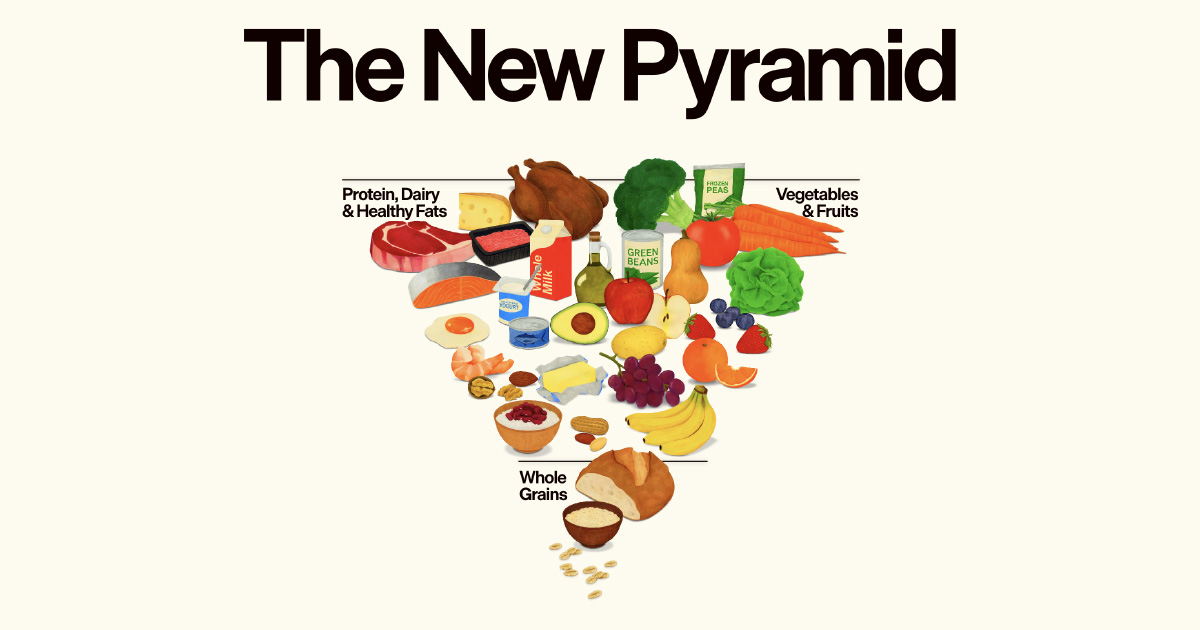 U.S. Department of Agriculture/U.S. Department of Health and Human Services.
After more than a decade of MyPlate as the federal government’s go-to guide to nutrition, the new Dietary Guidelines for Americans have been released, reflecting what federal advisory bodies describe as the newest nutrition science and public health realities, from chronic disease and obesity to evolving ideas about what a “healthy” plate really looks like. The new guidelines emphasize “real foods”—high-quality protein, healthy fats, fruits, vegetables, and whole grains—while limiting highly processed foods and refined carbohydrates. More controversially, they also highlight animal sources of protein and full-fat dairy.
But as with any national food advice, the update raises familiar questions: what’s truly new here, do the guidelines reflect the latest in nutrition science, and how well do these ideas translate to everyday life?
To cut through the noise, we turned to Registered Dietitian Nutritionist Dara Ford and Health Studies Professor Anastasia Snelling from AU’s Department of Health Studies. In this CAS Conversation, they unpack what we should take away from the new guidelines the next time we’re standing in the grocery aisle or planning our next meals.
Q: MyPlate has been around for more than a decade. Why was it necessary to update it?
A: Yes, by law, the Dietary Guidelines for Americans are updated every five years by the United States Department of Agriculture (USDA) and the Department of Health and Human Services (HHS). This practice of providing dietary guidance to Americans has been occurring for more than 100 years. The update is intended to review new information on nutrition-related topics and revise the guidelines as appropriate based on the body of scientific evidence available.
MyPlate is the consumer-facing piece, developed in 2011, intended to provide a simple visual for how to break down a healthy plate. Prior to 2011, there was MyPyramid, and we now have a new, inverted pyramid. The updated guidelines are an important part of the evidence-based process to incorporate new research findings in public-facing recommendations.
Q: What’s new here—and how will it help Americans eat more healthfully?
A: While the graphic is new, the majority of the recommendations do not vary dramatically from previous versions. There has always been an emphasis on nutrient-dense fruits and vegetables, whole grains, and lean protein. The evidence continues to show that a well-rounded, plant-based diet is most strongly associated with positive health outcomes, and this has not changed, even though it is not reflected in the new guidelines.
The reality is that through all editions of the guidelines, more than 90 percent of Americans don't follow the recommendations. It cannot be said that the guidelines “made Americans unhealthy,” when the recommendations were never being followed. An emphasis on increasing fruits, vegetables, and whole grains while limiting added sugars, refined grains, and ultra processed foods is consistent with previous versions and remains the foundation of healthy eating.
Q: Do you have concerns about any of the recommendations?
A: While the written guidelines continue to recommend keeping saturated fat to less than 10 percent of total daily calories, the image places a strong emphasis on animal sources of protein, creating mixed messaging. Strong and consistent evidence linking saturated fats from animal sources to an increased risk of cardiovascular disease has been recognized since the late 1970s. Individuals should aim to reduce saturated fat intake, primarily by limiting animal sources of fat—yet the image directly contradicts this goal.
Additionally, while a strong emphasis on vegetables and fruits is wonderful, the inversion of the pyramid indicating a much lower intake of whole grains is concerning. Whole grains are nutrient-dense and fiber-rich foods and provide us with the carbohydrates we need to function. The inverted pyramid image does not communicate the balance necessary for a healthy diet as carbohydrates should make up over 50 percent of one’s daily caloric intake. The guidelines also make suggestions for reducing low-calorie non-nutritive sweeteners and synthetic dyes, despite there being insufficient evidence to support these claims.
Finally, the new guidelines removed the recommendation to limit alcohol, a known Group 1 carcinogen. All evidence supports the risks of alcohol, a toxin, yet the guidelines have removed the limitation.
Q: Who benefits most from these changes—and who might be left out?
A: The guidelines recommend an emphasis on what they call “real food.” As dietitians, we are all for supporting the intake of fruits, vegetables, whole grains, and lean protein sources. However, to effectively do so we need to make these foods more affordable in this country. These guidelines do not consider the social determinants of health or challenges with access to food and fail to address the lack of affordability of such foods.
Q: If Americans take away just one thing from the new guidelines, what should it be?
A: The takeaway should be that the evidence base has not changed. When possible, choose fruits, vegetables, and whole grains. Plant-based protein—something that is unfortunately not emphasized in these guidelines—are nutrient dense and can reduce the risk of negative cardiovascular outcomes. While the guidelines indicate there has been a “war against protein,” most Americans are consuming more than enough protein while failing to reach fiber goals.
Aim to limit added sugar and saturated fat. All of these points have been in the guidelines for decades. Finally, nutrition is nuanced, and finding an evidence-based expert to work with to answer individual questions may be helpful.
About the Experts

Dara Ford is the program director of the Master of Science in Nutrition Education and a professorial lecturer in the Department of Health Studies. She is a registered dietitian nutritionist with a PhD from Penn State University, where her research examined health-related quality of life, mortality outcomes, and diet quality in older adults. With a decade of experience teaching undergraduate and graduate courses in both in-person and online settings, Ford is passionate about working with future educators to improve quality of life through rigorous, evidence-based nutrition education.

Anastasia Snelling is a professor in the Department of Health Studies and director of the MS in Health Promotion Program. She has been a registered dietitian and member of the Academy of Nutrition and Dietetics for more than 40 years and is a fellow of the American College of Nutrition. Her book, Introduction to Health Promotion, was published by Jossey-Bass in 2014, and the second edition was published in 2023. Snelling directs the Healthy Schools, Healthy Communities Lab, which focuses on food system transformation. Grounded in the Social Ecological Model, her work in schools and communities seeks to improve health and food environments for DC residents.