
Meet the AU Student Host of New Podcast Tackling Big Health Questions
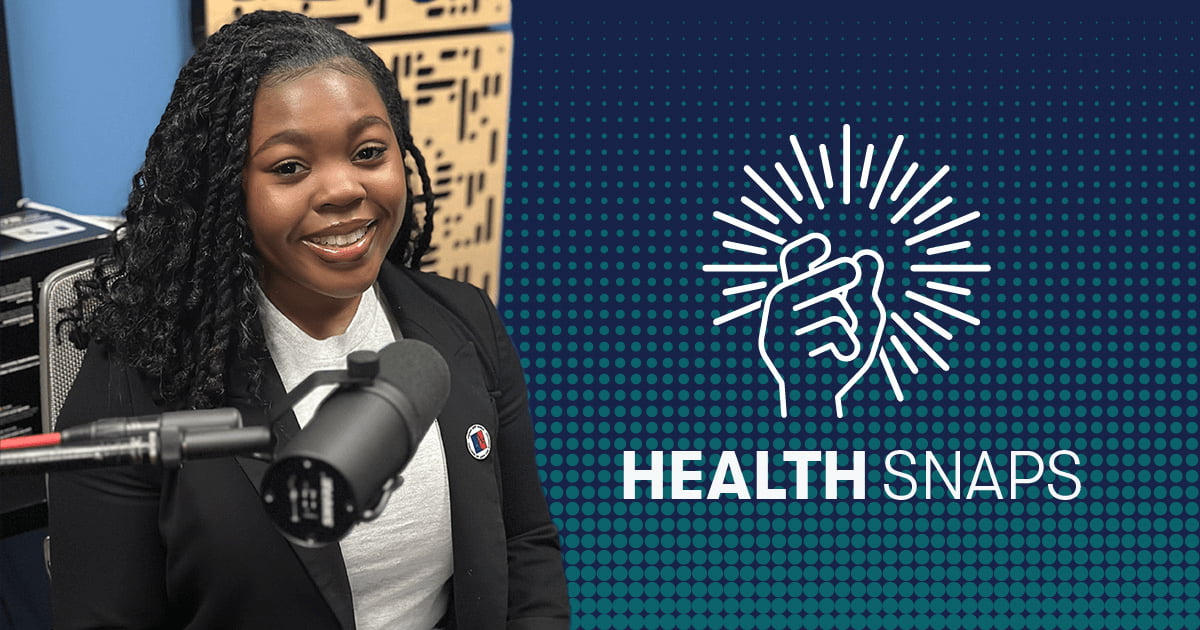 Rokiyah Hobbs in recording studio. Photo by Patty Housman; graphic by Cameron Hickman
Fast, focused, and timely, Health Snaps is a new podcast from American University’s Department of Health Studies that brings public health research to listeners in about two minutes. Each week, host Rokiyah Hobbs—a master’s student in Public Health Innovation and Practice—sits down to interview AU faculty about their research, spotlighting topics from climate resilience and brain-boosting nutrition to maternal health and sexual violence prevention.
The latest two episodes hosted by Hobbs have dropped: Design Thinking: how empathy, creativity, and real-world impact help solve public health problems, and From Classroom to Career: how real-world experiences prepare students for addressing complex public health challenges. You can listen to Health Snaps on Apple Podcasts, Spotify, Amazon Music, Castbox, and wherever else you get your podcasts.
We caught up with Hobbs to talk about those conversations and what it’s like to interview faculty, translate complex research, and bring timely public health topics to the mic.
PH: Two minutes goes by fast! What is your strategy for getting to the point in each short episode?
RH: Yes, two minutes is fast, especially talking about important issues. My strategy is to always have a reference script in front of me to stay on topic and understand our audience with AU college students and what they would want to learn from the podcast.
PH: Do you listen to a lot of podcasts, and how did you prepare for your role as host of Health Snaps?
RH: I do listen to podcasts regularly, especially ones that break down complex topics in an accessible way.
I try to strike a balance between preparation and flexibility, so the discussion feels polished but still natural. Preparing for Health Snaps was easy because my department chair Professor Caroline Kuo and I worked together to develop the questions and structure of each podcast. We wanted to sound informed but relatable.
Q: Did any episodes particularly resonate with you?
A: One episode I especially enjoyed recording was How Do We Prevent Sexual Assault? because Professor Kuo grounded the conversation in clear statistics and evidence-based research. Sexual assault is unfortunately very common in the lives of young adults, and having data to contextualize those experiences helped move the discussion beyond awareness to prevention. I appreciated how Dr. Kuo connected public health research to real-life settings of schools, families, and peer relationships, which made the topic both accessible and actionable for listeners. Recording this episode felt meaningful because it highlighted how research can inform early intervention, consent education, and cultural change in ways that directly impact young people.
Another episode that I enjoyed was the episode with Professor Liana Petruzzi. I learned that mental health contributes to 23 percent of maternal mortality cases, which deepened my understanding of prevention beyond the policy and structural factors I usually study.
PH: How do you see your role as being curious on behalf of students?
RH: I see my role as being a bridge between public health experts and students. My goal is to ask the kinds of questions students are actually wondering about and present information in a way that feels relevant to their everyday lives.
PH: What’s a public health challenge you think more students should be paying attention to right now—and do you think it might become a future episode?
RH: I think more students should be paying attention to climate change. In the episode with Professor Gabriella Meltzer, “How do I keep my family healthy in an era of extreme climate change,” we discussed the statics and risk factors associated with climate change. For example, every family should have an emergency plan in place. This includes a designated meet-up spot and a go-bag of emergency supplies in case you need to evacuate, or your power goes out for an extended period of time.
PH: Is there a moment from an interview that made you think, “This is why this work matters”?
RH: There were moments when guests shared how policies or health systems directly affected people's lives, and that really stood out to me. Public health isn’t abstract. It’s personal. That is why sharing information matters. The podcast episode “How can resilience transform public health solutions?” with Professor Kuo highlights the ways that individual perspectives and motives can push public health forward in a positive direction.
PH: What’s one moment that you’ll carry with you long after the podcast project is over?
RH: One moment I'll carry with me is realizing how powerful clear communication can be. Knowing that a short, two-minute episode could help someone better understand an issue or feel more informed showed me the impact of making public health accessible.
Speaking with each podcast guest before we started the episode helped me break the ice and sparked more conversations about them personally as well. I’m excited to keep building on that in future podcast episodes.