
Gold Hits Record Highs: What That Says about the Economy
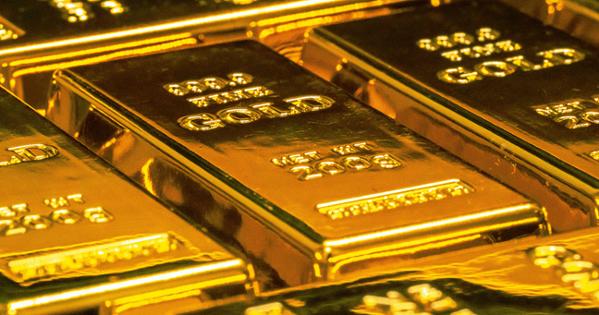
Gold prices have hit record highs, a development that typically reflects growing unease about the economy and global politics. Traditionally seen as a “safe haven” asset, gold tends to surge when investors are unsure where else to put their money, making its recent rise a signal of heightened uncertainty rather than a simple bet on inflation.
Economics Professor Gabriel Mathy, who specializes in macroeconomic policy, financial markets, and the history of economic crises, says today’s gold rally is being driven by a mix of interest rate expectations, geopolitical risk, and investor speculation. In this interview, Mathy explains what gold prices can—and can’t—tell us about economic anxiety, how interest rates shape gold’s appeal, and why soaring gold prices don’t necessarily translate into real-world consequences for most Americans.
PH: Gold is near record highs—what’s that telling us about how worried investors are about the economy right now?
GM: Gold is usually a safe haven. When there is significant uncertainty, gold is seen as safe. So, this is consistent with significant uncertainty, both for the economy and for geopolitics.
PH: So, are these gold prices mostly a bet on rising inflation, or is there more going on?
GM: The traditional view is that gold rises when inflation is high, and this is not wrong.
However, we tested this out in my undergraduate Econometrics (economic statistics) course and found that the correlation is quite weak. However, when inflation was high in the 1970s, the Fed didn’t raise interest rates (in dollar terms) by as much as inflation, so the real interest rates fell. This seems to me to be a better explanation, especially since inflation today is down from the highs reached in the wake of the pandemic around 2022.
PH: How do interest rate moves—or expectations of them—affect gold? Could the current prices hint at what the Fed might do next?
GM: My thinking on this was influenced by a post by Paul Krugman on his old New York Times blog. He argues that the interest rate adjusted for inflation (the real interest rate) determines the price of gold.
One can think about it this way: You can consider getting an online savings account that gets you the prevailing interest rate, or you can invest in gold. If inflation is higher than your return on your on-line savings account, then you are actually able to afford less than you can now, so your real return is negative. This makes investing in gold more attractive. If the return on your savings account is much higher than inflation, then the safe savings account means you can buy more with your money over time, so it becomes much more attractive than buying risky gold.
Real interest rates were very negative in the 1970s, and the gold price surged, and real interest rates were very high in the 1980s, and the gold price collapsed, following this theory. Real interest rates are near zero today, but were negative in the 2010s, when the price of gold was lower, so this theory is not invalidated by today’s experience, but it’s not as good of an example as the 1970s and 1980s. Today’s price movement seems more driven by geopolitical and economic uncertainty under the second Trump administration, as well as good old fashioned speculation feeding a cycle of ever-rising prices.
PH: Should everyday Americans be paying attention to gold prices, or is this mostly a Wall Street story?
GM: Gold isn’t telling us more than what can be seen pretty easily by following the news. Everyday Americans might be interested in speculating on gold (or silver) prices continuing to rise. Buyer beware however—once the public gets involved in this kind of speculation, it’s often near the end before prices crash. In summer 1929, the bellhops and cabbies in New York started to ask about which stocks to buy, and the market crashed soon after.
PH: Trade policy and tariffs have been back in the spotlight recently. Could the threat of new or expanded tariffs add to the uncertainty that’s driving investors toward gold?
GM: That’s definitely a possibility. Central banks have been moving towards more gold purchases due to the geopolitical uncertainty, moving away from buying US Treasury debt due to the increasing view that the United States is an unreliable partner abroad.
PH: If gold stays this high, what could it mean for spending, saving, and the broader economy? Any history lessons we can draw on?
GM: Gold is not very important as an input to the broader economy, other than some uses in jewelry, dentistry, and so on. It’s very soft and so has few applications in industry (unlike diamonds, which can be used as very hard drill bits, and silver, which has useful chemical properties for electronics).
Gold used to be very important for the monetary cycles and for the financial sector under the gold standard, when gold was a form of money. However, since the final link between gold and the monetary system was broken with Nixon’s closing of the gold window in 1971, gold is just another commodity. There are some benefits to this, as now gold usage by dentists no longer requires licensing like in the mid-twentieth century. Also, it means that the gold price can fluctuate wildly without negative impacts on the economy. Under a gold standard, surging demand for gold would generate deflationary force that could push the economy into a recession (as arguably happened in the Panic of 1873 as several countries moved towards the gold standard). Instead, owners of gold can profit, at least for now, without negative impacts on the broader economy.
About Professor Gabriel Mathy

Associate Professor of Economics Gabriel Mathy currently focuses his research and teaching interest on the macroeconomics of the Great Depression, and on macroeconomics and economic history more generally. At AU, he teaches courses on economic history, macroeconomics, monetary economics, and international finance. Mathy has published in journals like the Journal of Monetary Economics, the Journal of Economic History, Explorations in Economic History, the Journal of Macroeconomics, and the Financial History Review.