
Clowning Around: Lessons from Actor Bill Irwin
“The body is the first instrument of expression,” according to actor Bill Irwin.
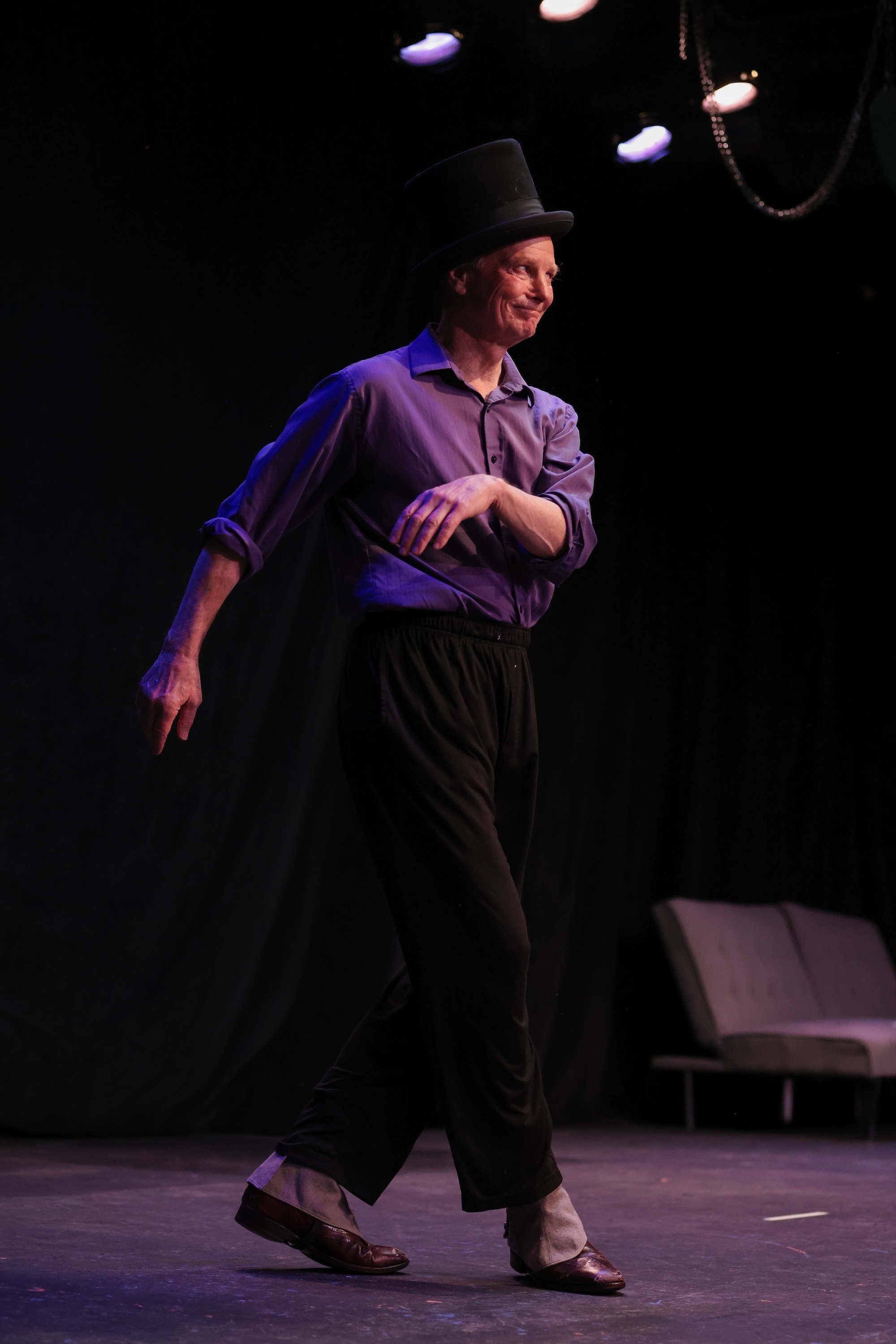
Irwin is a Tony Award-winning actor, director, writer, and clown whose career has spanned nearly five decades across stage and screen. Early in March, while in Washington, DC, performing his one-man show On Beckett at the Shakespeare Theatre Company, Irwin visited American University to lead a workshop and share insights with emerging theater artists in both entry-level and senior capstone theatre classes. Throughout the workshop, he shared his love of acting, movement, and comedy.
“Irwin had a joy for his craft that was immediately contagious,” says Rosey Johnston (CAS ‘29). “He was so willing to share his experiences and his intense passion for theater that it was hard to feel anything but inspired.”
Navigating the Theater World
Irwin shared insights on entering the theater world, led students through a physical comedy exercise, and fielded questions. When Irwin asked the students whether they had questioned their career choice over the past four days, laughter broke out across the Studio Theatre, and a few hands went up.
“This is a challenging profession. It can be sustaining, but it can also be difficult and, at times, unforgiving,” he said. To help theatre artists manage the physical and emotional demands of performing, Irwin encouraged them to give themselves every possible advantage—even in small, everyday ways. Sometimes it’s as simple as making the bed in the morning. “We take any bit of order or advantage that we can bring to our lives,” he added.
The Actor’s Checklist
Next, Irwin shared his personal checklist for preparing for a performance. First, he mentally checks in with himself, asking: “Should I review lines, practice with a scene partner, or just be silent?” Next, he attends to his physical self, emphasizing relaxing the knees as a key preparation technique. “Everything we do onstage is physical, even standing still in a spotlight,” he said. He then recommended that the actors study themselves and practice in front of a mirror to see what they bring to the table, what roles they see potentially emerging from themselves, and how to expand on them. And then, just as importantly, to walk away from that mirror, because real work happens in front of an audience. Lastly, Irwin highlighted the importance of breathing. “Breathing is everything. It’s easy to forget, but it’s fundamental to performance.”
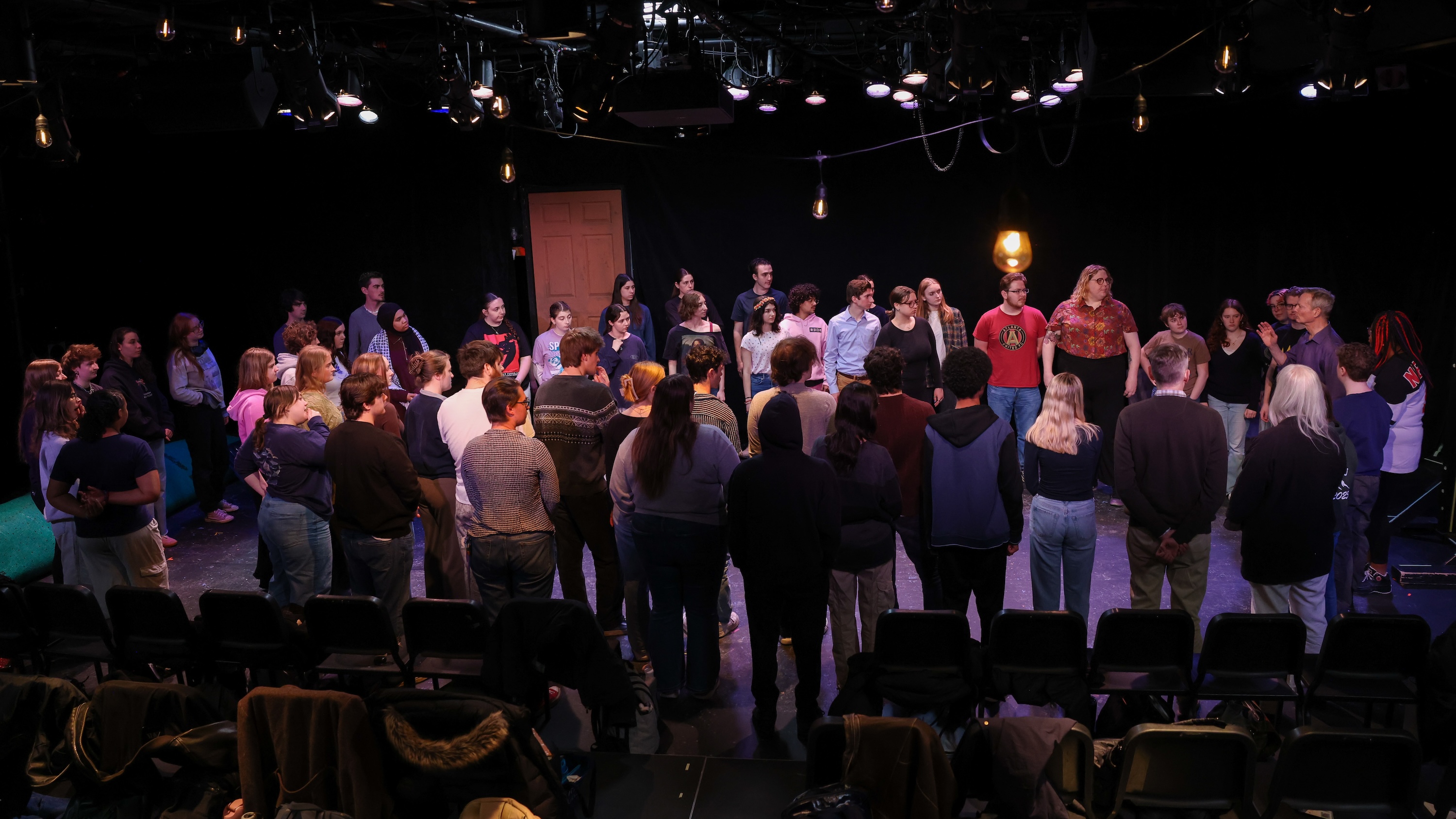 Class workshop led by Irwin. Photo: Ethan Kauffman
The Art of Movement and Humor
The art of physical comedy uses the body as a vehicle for humor, but Irwin pushes those boundaries further. In On Beckett, he brings the texts of renowned Irish writer Samuel Beckett to life through miming and dialogue. The clown emerges as a key element of his work, infusing physical comedy with intentional failure and a direct connection with the audience.
Then, Irwin brought the students to their feet to practice body work, comedy, and gesture. He asked the students to walk through an open doorway—but to make a mistake. One by one, they stumbled and fumbled, practicing the kind of inherent, comedic failure that defines the clown. “The clown’s audience is always present—there’s no fourth wall. In acting, sometimes you shield the audience. In clowning, mistakes are part of the connection,” he said.
Several students noted their interest in clown work and the creativity that it allows them to bring to the stage. “Clowning is such a joyful art that allows us as artists a very specific medium to get a little silly,” said Johnston.
Before leaving to prepare for that evening’s performance of On Beckett, Irwin concluded the presentation with a brief showcase of his work, performing a tap dance while deftly flipping an oversized black felt hat. “I'm so grateful our students got to be in the room with an artist of Bill's caliber," says Professor Tara Giordano. "Clown invites us to stay in constant relationship with discovery, and Bill is still so alive in the search after more than 50 years. It's impossible to spend time with him and not leave hungry for the work.”
Learn more about AU's Theatre/Musical Theatre Program