
Finding Her Classroom
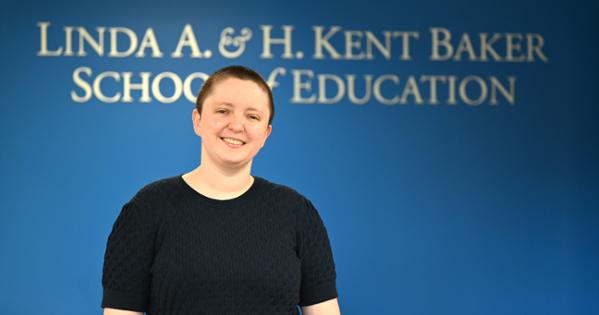
At the Baker School of Education at American University, Ruby Marsh’s journey reflects both the adaptability and purpose that define today’s future educators. This May, Marsh completes an ambitious combined pathway: a Bachelor of Arts in Spanish studies with a minor in elementary education, alongside a Master of Arts in Elementary Education—a dual achievement shaped by persistence, discovery, and a clear passion for teaching.
Originally from Los Angeles, Marsh’s path to AU was anything but straightforward. Her inspiration traces back to a seventh-grade Spanish teacher who left a lasting impression. More than language instruction, that classroom offered lessons in empathy, care, and human connection. Marsh recalls a moment when the teacher paused instruction to comfort a distressed student—an act that redefined what teaching could look like. That example continues to shape her vision of education as a space where students feel seen, supported, and valued.
Like many students navigating the uncertainty during the COVID-19 pandemic, she reconsidered her plans at a pivotal moment. After withdrawing from the school she originally planned to attend, she spent a gap year tutoring and guiding a family of five through remote learning. That experience was transformational and lit a spark in her. When she arrived at American University, she initially planned to study anthropology but soon found herself drawn to Spanish and, ultimately, to education—a field that had quietly been present in her life all along.
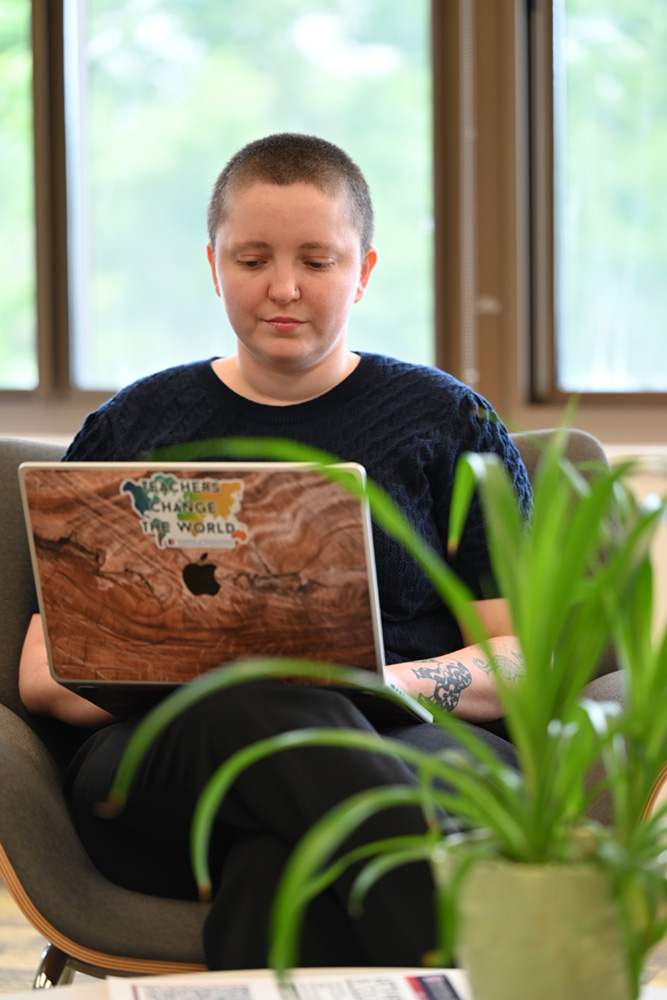 While in the Spanish program, her work was coaching speech and debate for students ranging from third to twelfth grade, but Marsh’s experiences consistently pointed toward teaching. “It was so obvious that was what I was passionate about,” she reflected, noting that it took exposure to the Baker School to fully recognize it as a career path.
Among her most transformative experiences at AU was her student teaching placement in a first-grade dual-language classroom in Washington, DC. Initially, the transition from theory to practice was humbling as she realized she was still learning to be a lead teacher.
“I took notes and absorbed as much as I could from watching my cooperating teacher and other teachers in the building. I learned so much not just about how to teach but also about the social-emotional aspects of teaching kids that age.”
Over time, guided by a skilled cooperating teacher, she developed confidence, instructional strategies, and a deeper understanding of both academic and social-emotional learning. By the end of the semester, she felt prepared—though still learning—to step into her own classroom.
Coursework also played a pivotal role. A graduate-level literacy course taught by Dr. Jasmine Rogers reshaped Marsh’s understanding of how children learn to read, equipping her with tools she now applies daily. Equally influential was Spanish professor Juliana Martínez, whose teaching style modeled rigor, flexibility, and care—qualities Marsh now strives to embody.
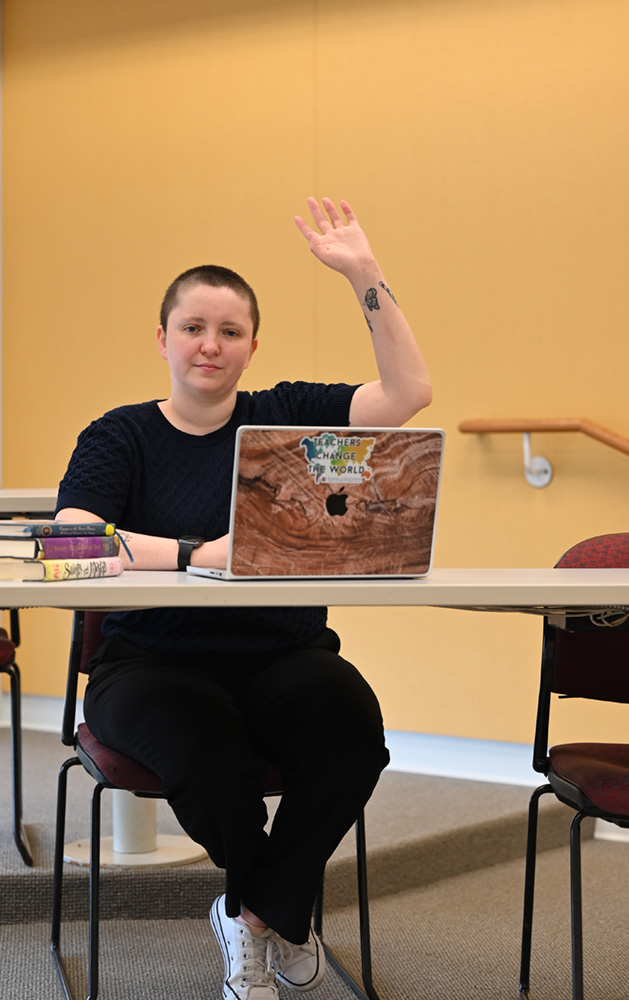 Looking ahead, Marsh is aware of the challenges facing education, particularly the systemic inequities impacting marginalized students. She speaks candidly about the need to confront how disciplinary practices can harm Black and Brown children, and those with disabilities, emphasizing that these issues are deeply interconnected with broader concerns about engagement and achievement.
Her advice to future educators is both practical and profound: “Teaching kids how to exist in this world is political.” It requires not only openness to new perspectives but also the courage to advocate for students and uphold one’s beliefs. “You will learn so much in your time in this program and through your clinical experiences, and you will grow and change your beliefs.”
As she prepares to enter the profession, Marsh carries with her not just two degrees, but a strong sense of purpose—grounded in experience, shaped by mentorship, and driven by a commitment to her future students.